Resilience: Why Navigating Change Is a Skill You Can Build
Resilience speaker Lauren Murrell on why navigating change is a skill teams can build, and the three-question tool she uses when fear rewrites the story.

H2 link
Tell us about your event and we'll match you with the right person for your audience.
Trusted by 3k+ event planners
Recommended experts

Most organisations treat resilience as something people either have or don’t, a fixed trait you hope shows up when things go wrong. It isn’t. Resilience is a skillset, and like any skillset, it can be built deliberately, long before the next inevitable disruption arrives.
At 23, weeks before my final law exams, I was diagnosed with acute myeloid leukaemia and given a 20 percent chance of survival. A stem-cell transplant from my sister saved my life. Years later, Hurricane Irma destroyed the Caribbean island I called home, and I had to rebuild my life again. I later co-founded the skincare brand By Sarah with my sister, growing it from our kitchen table into a business stocked by leading UK retailers.
Here’s what navigating repeated, unplanned change has taught me about resilience, and why I believe it’s a skill organisations can train rather than a quality they can only hope their people happen to have.
Change doesn’t wait for you to feel ready
Nobody feels ready for the kind of change that upends the plan entirely. Not a cancer diagnosis, not a hurricane, and, for most teams, not a restructure, a market shift or a sudden loss of direction either. The instinct in these situations is to wait until you feel more prepared before acting. But sitting tight and hoping for the best won’t work. What carried me through the most tumultuous days was a different skill: the ability to keep taking small steps forward through the fog of fear and uncertainty. That’s resilience, and I’ve come to believe it’s built the same way any skill is, through practice, not through willpower or personality.
This is also why organisations that only think about resilience once a crisis hits are usually too late. The people who navigate setbacks well are rarely the ones who feel calmest about it in the moment. They’re the ones who’ve already had practice making decisions without full information, because they’ve done it before.
Rebuilding twice taught me a different lesson each time
Rebuilding my life after leukaemia and rebuilding it again after a hurricane five years later were not the same experience, even though both required starting over. The first taught me the value of small, deliberate steps forward when the future felt completely unknowable after months in protective isolation. The second taught me something else: that resilience isn’t a single mountain you climb once and then keep forever. It has to be drawn on again and again, sometimes when you least expect to need it.
That lesson carried directly into changing careers: leaving law, becoming an entrepreneur and starting By Sarah. Building a business with my sister from our kitchen table with no guarantee it would work required the same muscle: making a decision, seeing what worked, adjusting, and continuing without waiting for certainty. None of these situations looked alike on the surface. All three depended on the same underlying skill.
“Resilience is not a personality trait. It’s not something a lucky few are born with while everyone else struggles without it. It’s a skillset, a way of relating to change and adversity that can be strengthened over time”.
Building resilience before you need it
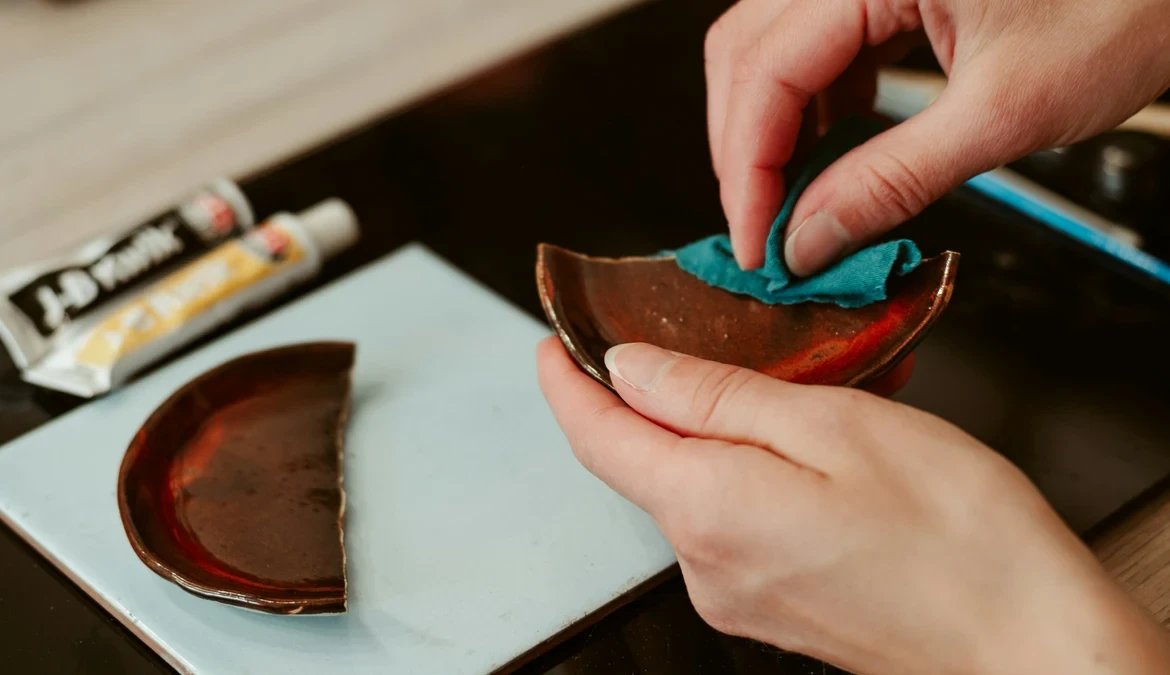
The mistake many organisations make is investing in resilience only as crisis response, a wellbeing session after a difficult announcement, a support line after a restructure. That has its place, but it treats resilience as a bandage rather than a capability. In my experience, teams that practise navigating uncertainty in smaller, lower-stakes moments hold together far better when a bigger disruption arrives, because the skill is already familiar.
One way I build that familiarity myself is a tool I call The Case File.
Fear has a habit of arriving with amnesia. In the moment, I forget that I sat in a hospital room for months and found a way to keep going. I forget that I walked away from a legal career I’d spent years building, and survived that too. I forget that I’ve started things that didn’t work, said things that didn’t land, and rebuilt more than once from a place that felt like zero. The fear doesn’t lie. It just leaves out most of the story.
A good detective (or lawyer) doesn’t ignore evidence, they gather it, lay it out, and let it tell the full picture. Most of us do the opposite with our own lives. We remember the uncertainty and forget the survival. We catalogue the stumbles and overlook the comeback.
So when something ahead feels too big, I open the Case File. It’s three questions:
- What’s the hardest thing I’ve navigated in the last five years?
- What did I think I couldn’t handle, that I ended up handling?
- What version of me would be surprised by who I am today?
The purpose is not to dwell on pain, but to collect evidence, proof that you are more capable than fear gives you credit for.
The same tool works at a team level. Before your next change initiative, ask your team the same three questions about the last disruption you got through together. Naming what you already survived out loud, as a team, brings people together more strongly than well-meaning reassurance about the plan ahead alone.
Frequently Asked Questions
Is resilience something you’re born with, or can it be developed?
Resilience can be developed. It is a skillset built through practice and repeated experience of navigating change, and people strengthen it over time.
Why do organisations often get resilience training wrong?
Organisations often get resilience training wrong because they only address it reactively, after a crisis or upheaval has already happened. Building the skill in smaller, everyday moments of change makes people far better prepared when a bigger disruption arrives.
What kind of events suit a resilience and change keynote?
A resilience and change keynote suits leadership offsites, restructures, wellbeing weeks, International Women’s Day events, and any session where a team is navigating uncertainty, whether that’s a market shift, a reorganisation or a challenging financial year.
Does resilience mean staying positive no matter what happens?
Resilience means being able to keep functioning, deciding and moving forward while things are still unresolved. It involves acknowledging how difficult a situation is, so it has nothing to do with toxic positivity.
Can the same resilience skills apply to both personal setbacks and business challenges?
Yes, the same resilience skills apply to both personal setbacks and business challenges. The mechanism is the same whether the change is a health crisis or a difficult quarter. Only the scale differs.
Interested in booking Lauren Murrell for your next event? Get in touch with the PepTalk team and we'll scope the right format and a quote for your audience. You can also call us on +44 20 3835 2929 (UK) or +1 737 888 5112 (US). Remember, it's always a good time to get a PepTalk!
Lauren Murrell
Read more from Lauren Murrell
Lauren Murrell is a resilience and mindset speaker and co-founder of the award-winning skincare brand By Sarah. After surviving leukaemia and rebuilding again following Hurricane Irma, she helps organisations navigate uncertainty. She writes the weekly newsletter Rise on Purpose, has spoken for Goldman Sachs and the University of Oxford, and features in Forbes and The Times.
Tell us about your event and we'll match you with the right person for your audience.
Trusted by 5k+ event planners
Similar Articles





Tell us about your event. We'll find the right voice.
Get expert recommendations matched to your brief, your audience, and your budget.