The first step to making moves with your money
How to change your money behaviours and forge out the financial future you want. Backed by financial expert Lisa Conway-Hughes.


H2 link
Tell us about your event and we'll match you with the right person for your audience.
Trusted by 3k+ event planners
Recommended experts



The first step to making moves with your money
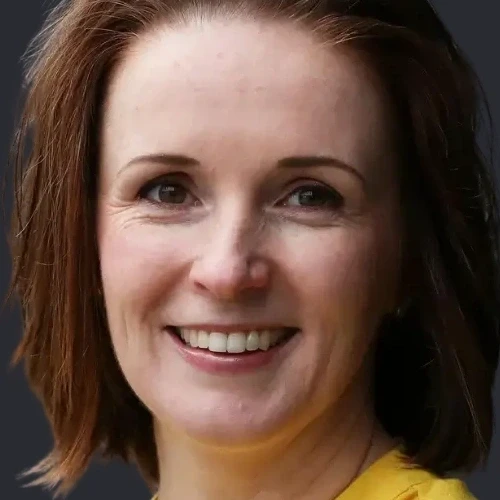
Talking about finances can be a touchy subject. It's not something we're actively encouraged to discuss or, more importantly, educated about, so with it all treated as an unspoken secret, figuring out your finances can seem daunting. The first step to making moves with your money is simply understanding where you stand today and where you want to get to, so today we're giving you a quick rundown of the core pillars of personal finance and how to change your money habits to build the future you want. All with the knowledge and expertise of Lisa Conway-Hughes, a financial adviser and keynote speaker who helps organisations put money confidence at the heart of their people strategy. Explore more of our personal finance speakers if you'd like to bring this thinking to your own event.
Your first step: the questions to ask yourself
Before you start, consider the answers to these questions:
- Think about your family's financial situation when you were eight years old. Can you see any parallels in your own money behaviours?
- Do you split your income into pots? How do you currently handle your short, medium and long-term financial goals?
- Consider your financial future. What kind of retirement do you want, what sort of lifestyle do you envisage, and what assets (a holiday let, a car, and so on) are you looking to purchase?
Assess where you are
The key to figuring out your finances is establishing your baseline. This looks at the basics of income and outgoings, but also your debt and money behaviours. Once you've mapped out all of these, you'll have a much clearer picture of your starting point.
Your finances today
Get an accurate view of your current financial situation by working through this list:
- Access a year of statements. Average your monthly income and outgoings.
- Where is it going? Do some digging to see exactly where your money goes on a month-by-month basis. Get as granular as looking at how and when you've spent on gifts, eating out, clothes, gadgets and self-care. Being honest with yourself is key to creating a plan that will actually work for you.
- Do you have any debt? Put together a simple spreadsheet of how much you owe, to whom, and the interest it accrues annually. Rank each debt in order of difficulty to pay off.
- If so, why are you in debt? Lisa highlights that we often see parallels between our spending behaviours and our family's financial situation when we were eight. Perhaps you always had enough so never had to worry about spending, had relatives who took out loans or used credit cards regularly, or never had much and now feel free to spend what you like. Looking at your money behaviours objectively can offer real insight into where you might be slipping up.
Looking forward
Next, think about your medium and long-term goals: what you want for yourself over the next five years, ten years and beyond.
Pension
- Consider what sort of annual income you want in later life. Take into account when you'd like to retire and your desired quality of life.
- Get to know how pensions work and how they interact with tax. Lisa notes that pension contributions can help reduce the amount of your income taxed at the higher rate. For example, for someone earning around £55,000, paying an extra £5,000 into a pension can bring enough of their taxable income back under the higher-rate threshold that some of it is taxed at the basic rate instead of the higher rate. The exact effect depends on your personal allowance and total income, so it's worth checking your own numbers or speaking to an adviser.
- Look into your pension provider. Your employer will opt you into a provider by default, but you have the power to change providers or open a personal pension.
Goals
- Are you saving for a house, car, wedding, travel, or whatever else is on the horizon? Estimate when you might need the money and roughly how much.
- Think about potential or aspirational increases in your income over the next few years. Do you have an estimated salary or promotion you're working towards? Or is income from your own business likely to change over the coming years?
Create new money habits
Now you have your starting point and some goals set out for the future, it's time to put your money where your mouth is (pardon the pun) and build habits that make these aspirations a reality.
- Money pots. Lisa recommends splitting your income from the moment it hits your account, into several 'pots' or direct debits. These pots should typically include:
- Your own spending money for the month
- Regular outgoings, like bills and rent or mortgage payments
- Pension
- Tax
- Payments that come up once a year, such as gifts, hobbies and holidays (this will look different for everyone)
- Investments (only once you have an emergency fund in place, see below)
- Your emergency fund. Everyone should aim for a backup emergency fund, typically equivalent to around three to six months of living expenses depending on your situation, Lisa says. That sounds like a lot, but it's a sensible safety net to have in place before you start investing, in case of any financial hardship.
- Use your diary. Lisa is a big supporter of using your calendar to benefit your back pocket. Assign each month a different financial task, for example, every January, spring-clean your contracts. Either cancel them, or get in touch with your supplier to see if you can access a better deal.
- Share the load. If you live with a partner, split the monthly financial tasks. Sit down together and plan how to support each other with your finances and lighten the collective load.
- The snowball strategy with debt. Paying off debt can feel overwhelming. Lisa recommends the snowball method: keep up your monthly payments, but put any extra cash towards the debt that's easiest to clear first. That initial win can give you the motivation to keep chipping away at the rest.
Expand your financial horizons
Once you have solid money management habits and an emergency fund in place, you can start thinking about investing. Whether you're new to it or have been investing for a while, Lisa has some pointers that can help:
- Use an ISA. A Stocks and Shares ISA shelters your investments from UK tax on gains, dividends and interest, up to your annual ISA allowance.
- Pay in monthly. As the market moves, regular contributions let you benefit from those fluctuations. This is called pound-cost averaging, which spreads your entry price over time rather than investing a lump sum that could be exposed to a single bad moment in the market.
- Understand your risk tolerance. Money you might need in the next five to ten years calls for a more cautious approach, while money you won't touch for twenty years or more can typically carry more risk. Generally, taking a measured risk over a long period gives you a better chance of seeing returns, though nothing is guaranteed.
- Know what you're invested in. Many people simply hand their investment pot to a provider who does the investing for them. With online platforms making it easier to see where your money is going, it's worth looking into exactly what you're invested in.
None of this is personalised financial advice. It's general, factual information to help you get started, so for guidance on your own circumstances, speak to a regulated financial adviser.
Put simply, figuring out your finances is all about switching up your money management behaviours, getting clued up on where your money is going, and thinking about longer-term plans that go beyond your next holiday. Looking after your finances doesn't have to be a chore, it can simply be a way to access the present and future lifestyle you're aiming for. Feel inspired to make some habit changes? Check out the rest of our blog for advice on mental wellbeing, leadership, motivation, overcoming adversity and more.
💡 If you'd like to arrange a PepTalk of your own with Lisa Conway-Hughes, to give your employees the confidence to focus on their finances, get in touch with our team.
Team PepTalk
Read more from Team PepTalk
At PepTalk, we harness the power of human intelligence to inspire and transform your people, insights, and events. Whether you're looking for expert speakers, tailored learning experiences, or unforgettable corporate events, our team is here to help. Get in touch with us today to find out more.
Tell us about your event and we'll match you with the right person for your audience.
Trusted by 5k+ event planners
Similar Articles






Tell us about your event. We'll find the right voice.
Get expert recommendations matched to your brief, your audience, and your budget.