
Available to book
Beth Kaplan
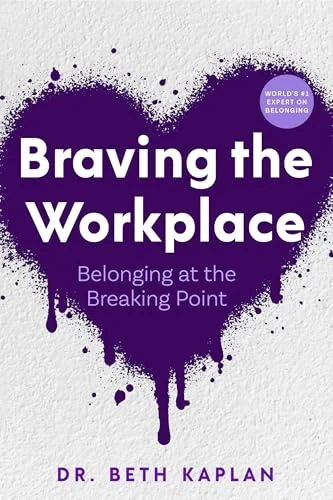
Beth Kaplan helps organizations build belonging that keeps people and cuts the cost of turnover. A workplace culture speaker and belonging researcher, Beth wrote Braving the Workplace and is building a belonging measurement tool with the University of Pennsylvania.

Beth Kaplan studies why people stay at work and why they leave, and turns that research into practices leaders can put to work straight away.
Beth holds an EdD and an MSEd in learning and leadership strategy from the University of Pennsylvania, which recognizes her as one of the world's leading experts on belonging. She's developing a tool with Penn that measures belonging and predicts a person's propensity to thrive. She wrote Braving the Workplace: Belonging at the Breaking Point, and her work has been featured in HRD Connect.
Beth's approach draws on neuroscience, research into human connection, and post-traumatic growth, shaped by her own experience of overcoming adversity. She shows managers the specific daily behaviors that build trust on a team under pressure, and connects them to the numbers executives already track, including retention, engagement, and the cost of replacing someone who leaves. Salesforce, Georgetown University, and the Carnegie Foundation have all drawn on her expertise.
Audiences leave able to name what's missing in their own culture, apply a trauma-informed approach to conversations with struggling staff, and recognize the stories they carry that shape how they lead under stress.
Book Beth for events where leaders want belonging turned into something they can measure and act on.
Topics, sessions and talks
Belonging gets treated as a soft benefit until the resignation numbers arrive. Beth Kaplan sets out what belonging actually is, how it forms between people rather than inside them, and what it does to wellbeing and output in a high-pressure environment. She draws on her doctoral research at the University of Pennsylvania and on the stories behind it, so leaders finish with the steps that move a culture rather than a definition to quote.
Written for the people managers who set the tone day to day, this session turns belonging from a value statement into behavior. Beth Kaplan covers the small repeated moments that build trust on a team under real pressure, how a leader's own example carries further than any policy, and how to hold people accountable without making them feel expendable. Managers leave with practices they can run in their next one-to-one.
Retention, resilience, and performance all rest on whether people feel they belong where they work. Beth Kaplan makes the case for trauma-informed leadership, explaining what that term means in practice and why it has become relevant to ordinary workplaces rather than clinical ones. She shows leaders how to spot what their people are carrying and how to weigh wellbeing alongside output instead of against it.
The beliefs a person forms long before their current job still shape how they lead, communicate, and handle stress. Beth Kaplan helps leaders and teams identify those internal narratives, use what the difficult ones taught them, and deliberately write new ones that support resilience and sustainable performance. The session draws on her research into post-traumatic growth and suits leadership programs where the audience is ready for something personal.
Turnover, disengagement, and burnout carry a price that rarely appears as a single line on a budget. Beth Kaplan puts a figure on what it costs an organization when belonging fails, tracing the route from a manager's daily behavior to a resignation letter. She pairs the financial case with the human one, giving executives the argument they need to fund culture work and the practical steps to start it.
Testimonials
Featured Projects

frequently asked questions
Something we've not covered here?
Beth Kaplan builds her sessions on her own doctoral research at the University of Pennsylvania and on first-person stories from people who left jobs where they did not belong, pairing the financial case with the human one rather than presenting data alone.
Beth Kaplan specializes in workplace belonging, psychological safety, retention, and trauma-informed leadership, the themes running through Belonging at Work, Lead With Belonging, The Future of Work Is Belonging, and Rewrite Your Story. She holds an EdD in learning and leadership strategy from the University of Pennsylvania, wrote Braving the Workplace, and is co-building a belonging measurement tool with Penn researchers.
No. PepTalk adds no booking fee, so you pay the speaker's fee and nothing beyond it. The service, from shortlist through to contracts and event-day logistics, is included. For repeat or multi-event bookings, PepTalk can agree preferential rates with your procurement team.
Share your event date, audience, format, objectives and budget, and PepTalk sends a hand-picked shortlist within 24 hours. Each suggestion comes with a profile, a fee and a recommendation on the strongest fit. Once you choose, PepTalk handles contracts, travel and logistics through to event day.
The typical fee range is the speaker's standard in-person fee in their home market, shown in their local currency. It moves with format, location, date and session length: virtual sessions and shorter slots usually cost less, while international travel and peak dates cost more. Send your brief to PepTalk and the team will confirm the exact fee in your currency.
Not all of them, and it makes no difference to your booking. PepTalk's network of 15,000+ speakers covers talent the team works with directly alongside speakers represented by agents and agencies worldwide. PepTalk approaches the speaker, negotiates the fee and handles contracting either way.
Three to six months ahead is comfortable for most events, and 12 months is better for large conferences, peak-season dates or one specific in-demand speaker. Shorter timelines are workable, and PepTalk regularly fills last-minute and replacement bookings within days. Availability is the constraint, so get in touch as soon as you have a date.

