Train Like Bond: Secrets a Hollywood Trainer
Hear from Daniel Craig's right hand fitness trainer Simon Waterson on how he gets his clients in shape


H2 link
Tell us about your event and we'll match you with the right person for your audience.
Trusted by 3k+ event planners
Recommended experts
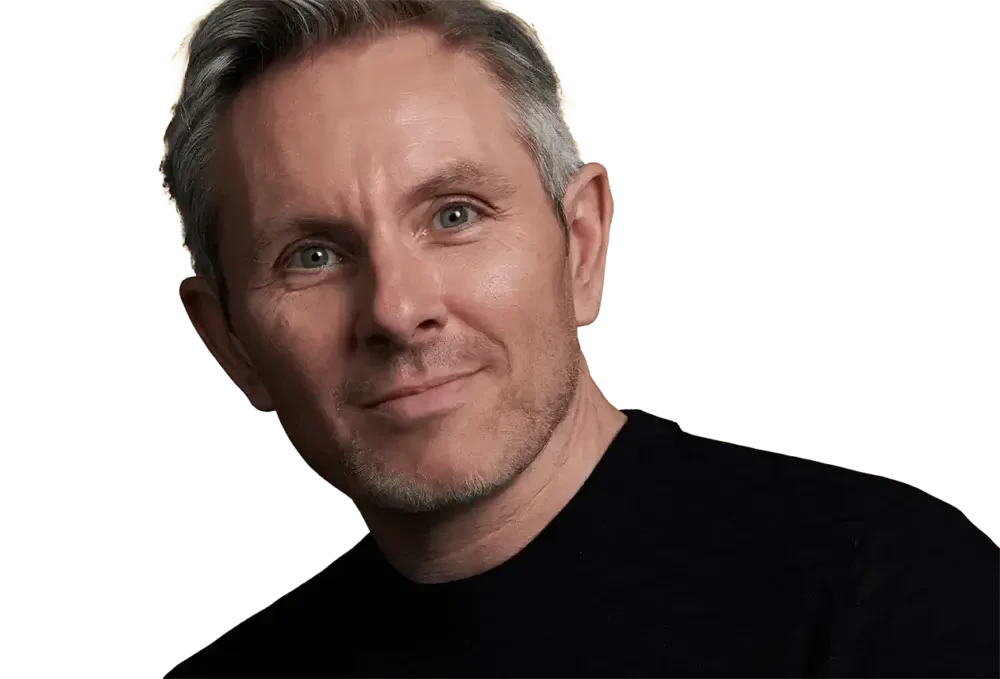

When we look at the fitness levels of stars like Simon Waterson's clients, Daniel Craig and Chris Pratt, it's easy to think you'd need a stunt double's schedule to train like Bond. But Simon, the right-hand man to 007 himself, is here to share his secrets on how he gets his Hollywood clients into shape, built on three key tenets: performance, nutrition and recovery. You might be surprised at how simple it is to fix your fitness mindset.
How to train like Bond
Of course, his clients work hard in the gym and keep their nutrition in check. But Simon notes that the key is self-compassion throughout: "Don't kill yourself in the gym and be over intensive. Don't be in a calorie deficit. Don't starve yourself. Don't diet. Do all the things that are really kind for yourself."
That additional stress from dieting can be physically and mentally draining in itself. Why do you think most diets don't work?
The same goes for the gym. It's easy to come down hard on yourself when you're not being as active as you might like.
But missing a session or not performing at your best every time is part of life. When we look at Hollywood stars we don't see the missed sessions or the quick drive-through run on the way back from a shoot. The reality is they have off days just like all of us: after all, they are just human.
Simon hammers this home with his clients and says that no matter where you are in your journey, everyone should cut themselves some slack. Some deviation from an otherwise healthy diet, or a week off training to spend with loved ones, isn't going to move the dial long term. But a constant negative mindset will. It's that negativity that accumulates over time and can cause more harm than the little things you beat yourself up for. If the mental side of this interests you, our guide to mental fitness digs into that link between mindset and performance in more depth.
Flexibility and routine
Often when we think about optimal fitness, we think of a rigid routine, one that takes discipline to stay on track. And while this works for some people, for most of us, that's not the case.
"If you remain flexible with your workouts it gives you sustainability. Doing something rather than nothing keeps you on the road constantly," Simon says on flexibility. He works with his clients to make sure the workouts and nutrition he programs for them work for their lifestyle, not against it. For most of them, that means short workouts which can chop and change, and simple nutrition that doesn't see them carting boxes of chicken, rice and broccoli everywhere they go.
This "something is better than nothing" approach lets you see your day in a much more measured way: valuing all types of activity (walking, climbing the stairs or cleaning) and squeezing in workouts that work with how much time or energy you have. You might have had a bad night's sleep, so an hour-long weights session would only detract from your day. Or perhaps you've been pretty sedentary most of the day, so an evening run might be exactly what you need to stay on track. This active everyday mindset moves you towards your fitness goals without it feeling like a chore.
Get a good rest
We all know the importance of sleep for our everyday health, but it has an especially large part to play in physical fitness. Simon is a big proponent of sleep: "Sleep is the be-all and end-all of everything. It's where all of the repair is done. I think sleep and napping are really important." He encourages all of his "athletes" (clients) to nap daily, helping their energy levels and letting them reap the benefits of their hard work. For muscle growth and adaptation, the key phase of sleep is non-REM. This is when your blood pressure drops and the body shuts down into deep sleep; as less blood is needed by the brain, more is available to transport the nutrients and oxygen needed to rebuild muscle tissue. So if napping isn't for you, aim for at least 7-9 hours of sleep, especially during a recomposition period.
Don't over-commit
We've all done it: started a new year, new programme, or joined a gym with lofty expectations for what we want to achieve. We push towards those goals and then tail off. Simon says the key to preventing this is having realistic expectations: "People have expectations that are beyond what they're ever going to be able to achieve. Set yourself micro goals and then macro goals." It's the same discipline you'll see in our piece on the success habits of high-performing athletes, who build big ambitions out of small, repeatable wins.
When you're setting those goals, make sure you're not just focusing on aesthetics. Aesthetic goals are fine, but mixing them in with some measurable fitness goals is a good way to go. If you're working to become a fitter version of yourself, the aesthetics usually come as a nice side effect of that progress.
"Everything is aesthetic, but what's perfect for one person is completely different in someone else's eyes. aesthetics are important but we have no barometer for how we're feeling on the inside. You can't take a picture of that," says Simon on goals.
With his clients, Simon works on specific aesthetic goals based on scenes (think Daniel Craig's infamous walk out of the water in Casino Royale, or an actor bulking up for a superhero role) mixed with fitness goals such as being able to vault over a car bonnet or have the stamina for a demanding stunt sequence.
Keep your routine sustainable
Finally, sustainability. In line with his points on flexibility and self-compassion, rigidity and a punishing diet simply aren't sustainable. "Treat yourself like a toolbox: whatever works for you that week, stick to it. It then becomes sustainable, and once it's sustainable you get longevity, and that's when you start to see results," says Simon on how he approaches transforming his clients.
A diet and daily workout plan might work initially, but when it doesn't fit into your normal life it will no longer give you the results you're after. Instead, crafting a lifestyle that incorporates fitness is key. Make healthy choices, move when you can, and give yourself a break. It's consistency, and a move towards a lifestyle change, that will keep driving you towards a healthier and happier you.
With so much fitness and diet information out there, it's great to see someone at the top of their game offering advice that's reasonable and practical. If your event could use this kind of thinking in person, PepTalk's personal trainer speakers bring exactly this blend of performance, nutrition and recovery expertise to the stage. To check out Simon's full PepTalk, why not sign up for our subscription service?
Interested in booking Simon Waterson for your next event? Send us a message and we'll scope the right format and a quote for your audience. Remember, it's always a good time to get a PepTalk!
Ant Cauchi
Read more from Ant Cauchi
Ant Cauchi is PepTalk’s co-founder and a digital veteran with over 25 years of experience. A true Londoner at heart, now based in New York City, Ant has spent his career turning ideas into impact. With a background in marketing communications, new media, and creative direction, he has created award-winning campaigns for iconic brands and artists including Queen, The Beatles, and Radiohead. Before PepTalk, he co-founded Outside Line, a pioneering digital agency.
Tell us about your event and we'll match you with the right person for your audience.
Trusted by 5k+ event planners
Similar Articles







Tell us about your event. We'll find the right voice.
Get expert recommendations matched to your brief, your audience, and your budget.