Demystifying AI: Session recap and resources
Explore the different types of AI and learn how to integrate them into your work with "Demystifying AI: Empowering the Workforce of Tomorrow".
H2 link
Tell us about your event and we'll match you with the right person for your audience.
Trusted by 3k+ event planners
Recommended experts



Artificial intelligence is changing how we all work, and understanding the basics is fast becoming essential rather than optional.
Missed PepTalk's LinkedIn Live session, "Demystifying AI: Empowering the Workforce of Tomorrow"? This session recap covers the key points from Sharon Gai, an AI and digital transformation expert, plus the tools and resources she recommended for putting AI to work. If you're building AI literacy across your team, our roster of AI speakers is a good place to start.
Demystifying AI: the key types to know
As Sharon shared during the session, job postings mentioning ChatGPT and prompting had increased by around 21 times in the year prior, a trend that has only accelerated since. That's a strong signal that most of us benefit from understanding, at least at a surface level, the different types of AI and machine learning systems already in use.
To start, here are the key different types of AI:
- Artificial Narrow Intelligence (ANI). This type of AI is specialised in one task and operates within a limited, pre-defined range or set of contexts. Most of the AI in existence today is ANI, including ChatGPT.
- Reactive Machines. These AI systems respond to specific inputs with specific outputs without using past experiences to inform their actions. They can't learn or make decisions beyond their programming. A classic example is IBM's Deep Blue, which beat world chess champion Garry Kasparov in a rematch in 1997.
- Limited Memory. These AI systems can use past experiences to inform decisions. Most current AI, including self-driving cars, falls into this category. They use historical data and past experiences to predict future outcomes.
- Theory of Mind. This is a more advanced type of AI we haven't fully achieved yet. It refers to the ability of a system to understand the emotions, beliefs, needs, and thought processes of other intelligent entities, and to respond accordingly.
- Self-aware AI. This is the most advanced form of AI, which has consciousness, self-awareness, and sentience. These systems can understand their internal states and predict the feelings of others. We are still far from achieving this level of AI.

Using AI practically in your job
Sharon's advice is to think of your job not just as a title but as a series of tasks. Start by sorting your tasks into high-level and low-level ones, then look at what AI tools are available to help outsource the less valuable, easier-to-automate work.
To help you identify the best tasks to hand over, here are the skills that remain hard for AI to replicate:
- Cognitive flexibility
- Digital literacy
- Creativity
- Emotional intelligence
- Cultural intelligence
Keeping the above in mind, a report from research firm IDC forecast that a large majority of the world's biggest companies would adopt AI or machine-learning-enabled "Digital Managers" to help hire, manage and train staff, while cautioning that only a fraction would see real value from the shift without genuine human engagement. Whatever the exact numbers turned out to be, the underlying point holds: AI tools without human judgement built in tend to underdeliver.
Tools and resources to use AI in your life
Tools for images:
Tools for presentations:
Tools for video creation:
Human attribution tool:
- The Not By AI badges were created to encourage more humans to produce original content and to help audiences identify human-generated content.
Sharon isn't the only PepTalk expert speaking to this topic. Erica Farmer helps organisations turn AI adoption into practical, everyday habits, while Fiona Passantino focuses on building real AI literacy and leading teams confidently through the change. Between them, our AI speakers cover everything from the technical basics to the leadership and culture questions AI raises.
Frequently Asked Questions about AI in the workplace
What's the difference between AI and machine learning?
Machine learning is a subset of AI: the process by which a system learns patterns from data instead of being explicitly programmed for every scenario. All machine learning is AI, but some AI systems (like the Reactive Machines described above) run on fixed rules and don't use machine learning at all.
Do I need a technical background to work with AI tools?
You don't need a technical background to work with most AI tools. The tools listed above, from presentation generators to image tools, are designed for non-technical users. The skill that matters more is knowing which of your own tasks are worth automating, and which rely on the judgement, creativity or emotional intelligence that AI still can't replicate.
How can my organisation build AI literacy across the team?
Your organisation can build AI literacy across the team with a structured session led by a specialist speaker, paired with hands-on time using the tools above. Revisit the conversation every few months, since the tools and their capabilities move quickly.
Final thoughts
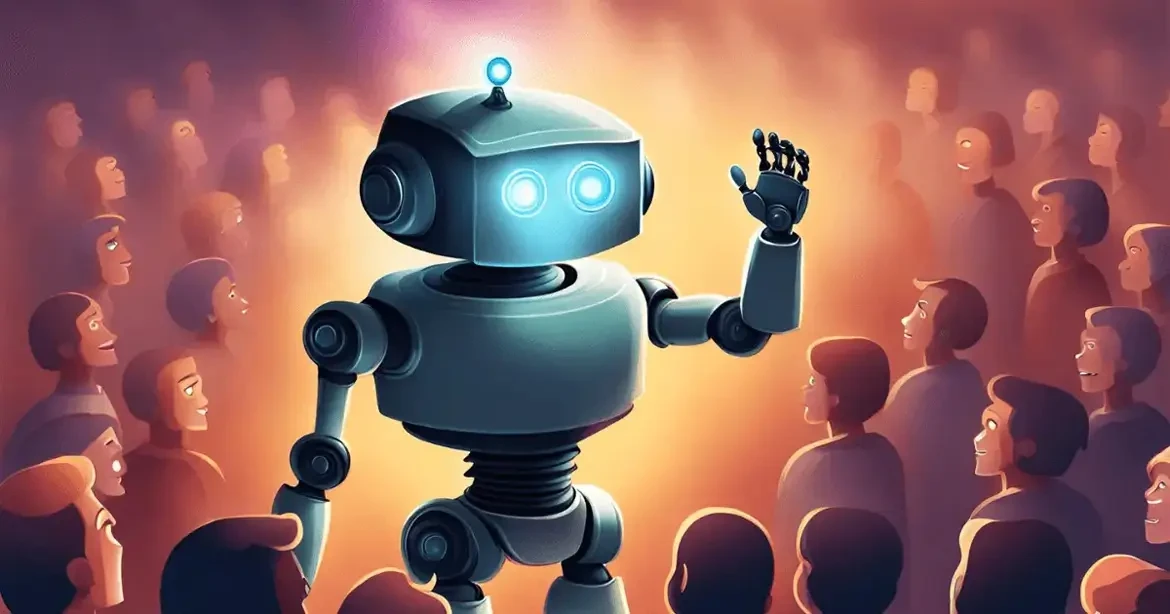
The image for this article was created by AI, with a prompt for a robot giving a PepTalk. Will we ever have video experts? The simple answer is that it will never be as inspiring or as motivating as someone with energy and a real passion for what they do. We want to learn and listen from those who smelt the air at the top of the mountain, changed society through advocacy, or simply see the world differently. In fact, many believe that Human Intelligence is the key to success, including for those trying to predict the future of work.
Interested in exploring AI further with your team? We have a wealth of human expertise and AI speakers in our network, ready to help you and your team get ahead of whatever is coming next.
💡 Would you like to bring an AI speaker to your next event? Let us know, and we'll find the perfect PepTalk expert for your organisation. Send us a message and we'll set up a free strategy call. Remember, it's always a good time to get a PepTalk!
Team PepTalk
Read more from Team PepTalk
At PepTalk, we harness the power of human intelligence to inspire and transform your people, insights, and events. Whether you're looking for expert speakers, tailored learning experiences, or unforgettable corporate events, our team is here to help. Get in touch with us today to find out more.
Tell us about your event and we'll match you with the right person for your audience.
Trusted by 5k+ event planners
Similar Articles





Tell us about your event. We'll find the right voice.
Get expert recommendations matched to your brief, your audience, and your budget.