Why Two Speakers Can Be Better Than One
Why two speakers can lift a room, plus duos, fireside pairings and interviewers to book, from The Tempest Two to Helen and Kate Richardson-Walsh.
H2 link
Tell us about your event and we'll match you with the right person for your audience.
Trusted by 3k+ event planners
Recommended experts

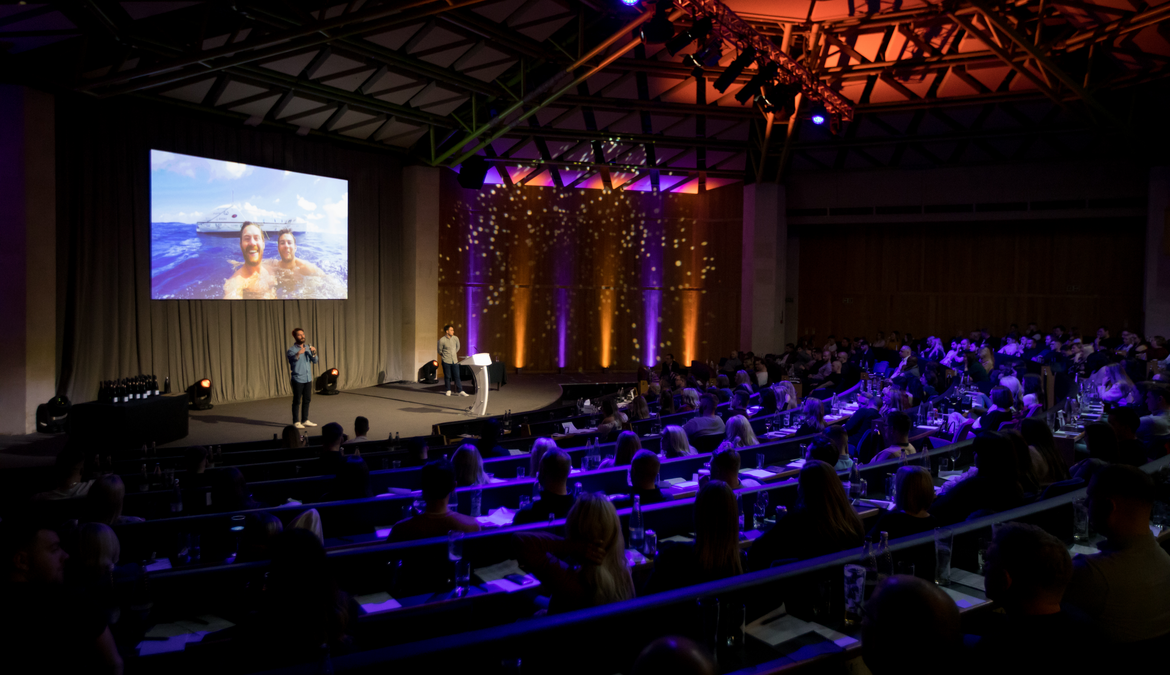
A client told us recently that one of the best things about booking two speakers was simply that there were two of them on stage. The back-and-forth kept the room energised for the whole session.
Two-person sessions come in three formats: natural double acts who built their story together, fireside chats between people with a shared history, and an expert paired with a skilled interviewer. Here's how each one works and who we'd put forward.
Why do two speakers work well on stage?
Over a long session, attention can sometimes dip, however good the speaker. Two speakers change the pace naturally: one picks up the story as the other finishes, they react to each other, and the audience has a new voice to tune into. That energy is often the first thing organisers mention afterwards.
There's a practical case too. A pair can give the audience two perspectives on the same events, which can make the lessons easier to apply. When the topic is teamwork, trust or communication, the audience gets to see it modelled on stage. Q&A can also run more smoothly, with each question going to whoever is best placed to answer it.
Which speaking duos present as a double act?
These speakers built their story together, so they present it together, usually in a standard keynote slot.
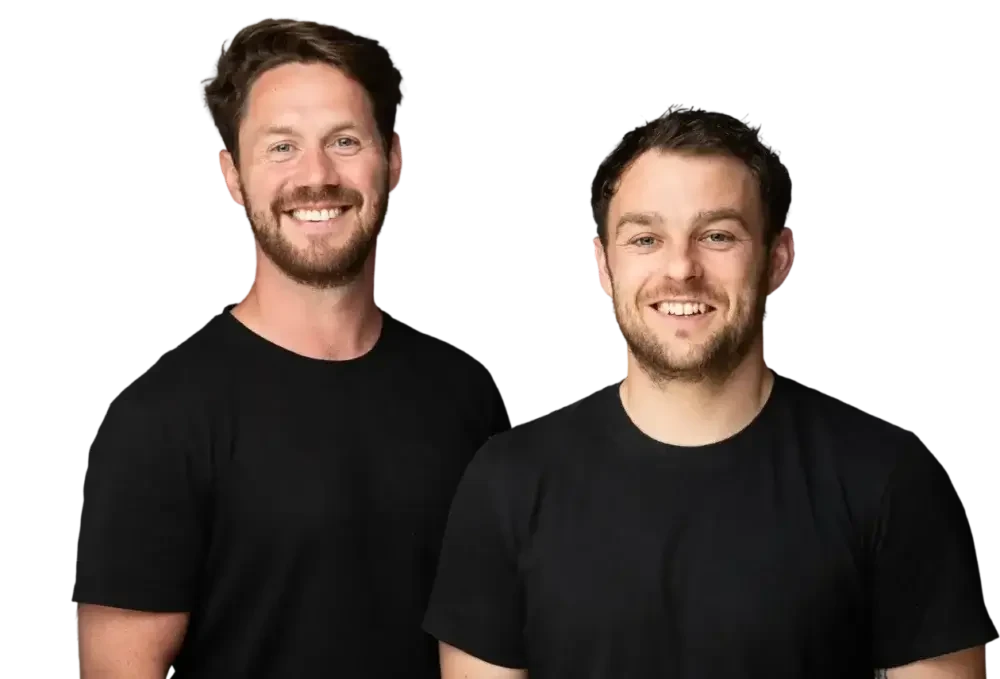
The Tempest Two are a two-handed act. Tom Caulfield and James Whittle rowed 3,000 miles across the Atlantic with no rowing experience, then climbed El Capitan having never climbed before. They trade first-person stories over cinematic visuals and break each decision down with psychology and neuroscience, which makes them a strong fit for sales kick-offs and leadership offsites on performing under pressure.
Seas The Day are Miriam Payne and Jess Rowe, the first all-female team to row the Pacific mainland to mainland. They use specific moments from the crossing, like repairing their power system and water maker mid-ocean, to show how a partnership holds up when things go wrong.
The Stoltman Brothers are Tom, a three-time World's Strongest Man, and Luke, a two-time Europe's Strongest Man. They speak as a pair about resilience, Tom's autism and Luke's mental health, and have spoken to site teams at SSEN Transmission on health, safety and wellbeing.
Erik and Emily Orton sailed the Caribbean for a year with their five children and wrote Seven at Sea about it. They share the stage throughout, structure the talk around the stages of an ocean passage and perform songs they wrote themselves.
Team Mouat take it up to four. The world's most decorated curling rink, with two World Championship titles and back-to-back Olympic silver medals, use nearly a decade of competing together as a case study in high-performance teams and decisions under pressure.
When the act is the entertainment
For after-dinner slots and awards nights, some acts are built entirely around the partnership. Mind2Mind are FISM World Champions James Harrington and Marina Liani, whose show has Marina reading the thoughts of audience members with her sight taken away. The Evasons perform second sight mentalism in tandem and have appeared on Penn & Teller: Fool Us. The Passing Zone, Jon Wee and Owen Morse, hold a Guinness World Record for juggling and build routines around trust and communication, with audience participation for team-building.
Which speakers do fireside chats together?
A fireside chat often works especially well when the two people on stage already know each other well. Years of shared experience give the conversation stories, in-jokes and honest disagreements that two people meeting in the green room can't produce. If the format is new to you, our guide to what a fireside chat is covers the basics.
Helen Richardson-Walsh and Kate Richardson-Walsh won Olympic hockey gold together for Great Britain at Rio 2016. Kate captained GB and England for 13 years and speaks on leadership and team culture. Helen is a qualified performance psychologist who talks openly about injury, depression and identity. Together they cover both the captain's view of building a culture and what it felt like inside the squad when things weren't going well.
Jake Humphrey and Professor Damian Hughes co-host The High Performance Podcast. Jake brings the stories from interviews with elite athletes and business leaders, and Damian brings the psychology that explains them.
Elis James and John Robins have hosted their award-winning radio show and podcast together for years. They suit hosting and after-dinner slots, and John's work on mental health gives the conversation more depth when the event calls for it.
» Explore: Fireside chat speakers
Who can interview your speaker on stage?
The third format pairs a speaker with someone whose job is asking good questions. The interviewer gives the session structure and can steer it towards what your audience most needs to hear.
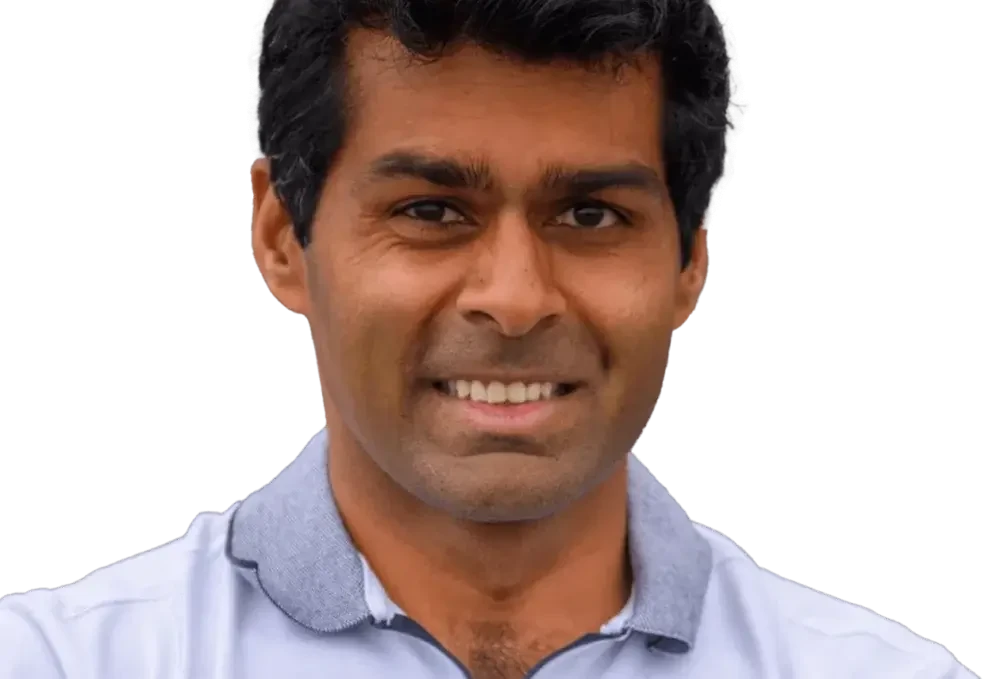
Pairings tend to land well when the two share some background. Sam Quek played in the same Rio 2016 gold medal squad as the Richardson-Walshes and now works as a broadcaster, so she can interview them as a former teammate. For Formula 1 and motorsport events, Karun Chandhok raced for Hispania Racing and Team Lotus and now analyses races for Sky Sports F1. He knows the sport well enough to get detailed answers from drivers, engineers and team principals.
For business, policy and current affairs, Emily Maitlis asks a calm, specific question and gives the answer room, following the thread wherever it goes. Rosanna Lockwood builds fireside chats around focused lines of questioning from years of interviewing central bank governors and Nobel laureates. Isabelle Kumar moderates for the European Commission, the United Nations and the WHO.
Guy Kawasaki offers a different setup. He researches your organisation in advance, meets stakeholders, then interviews your own executive on stage in the style of his Remarkable People podcast. Adam Pacifico can run the same format, preparing with your stakeholders beforehand and interviewing your leaders on stage.
Frequently Asked Questions
What is a speaking duo?
A speaking duo is two people who deliver a keynote together, sharing the story and handing over to each other on stage. Duos on PepTalk's roster include The Tempest Two, Seas The Day and the Stoltman Brothers, who each built their story together and present it as one act.
Why book two speakers instead of one?
Two speakers can help keep energy high across a long session, give the audience two perspectives on the same story and make Q&A run more smoothly. The format can suit events on teamwork, trust or partnership particularly well, because the audience sees those behaviours modelled on stage.
Is it more expensive to book a speaking duo?
A speaking duo isn't necessarily more expensive. Duos who present as one act, such as The Tempest Two or Seas The Day, usually quote a single fee. Booking two individual speakers, or a speaker and an interviewer, means two fees plus travel for both, so the total is usually higher.
Who are the best speaking duos for corporate events in the UK?
Two-person acts that work well for UK corporate events include The Tempest Two for resilience and performing under pressure, Seas The Day for partnership and problem-solving, the Stoltman Brothers for resilience and mental health, and Team Mouat for high-performance teams. For a conversation format, Olympic champions Helen and Kate Richardson-Walsh cover leadership, culture and mental health.
What is the difference between a fireside chat and a panel discussion?
A fireside chat is a conversation between two people, usually a guest and an interviewer, with time to go deep on one story. A panel discussion brings three or more speakers together on a theme, so each person gets less time and the conversation covers more ground.
Who can interview speakers at a Formula 1 or motorsport event?
Karun Chandhok is a strong choice to interview guests at Formula 1 and motorsport events. A former F1 driver for Hispania Racing and Team Lotus and a Sky Sports F1 analyst, he knows the sport well enough to get detailed answers from drivers, engineers and team principals.
How long should a fireside chat or two-person keynote be?
A two-person keynote usually fills a standard 45 to 60 minute slot, including Q&A. Fireside chats often work best at 30 to 45 minutes, which leaves enough time for a few in-depth stories without the conversation losing pace.
How do you prepare two speakers for a joint session?
To prepare two speakers for a joint session, brief them together on one call, so they agree who leads each section and how they'll hand over. Then ask production for two radio mics and, for a fireside chat, two chairs and a low table in place of a lectern.
💡 Thinking about two voices for your next event? Tell us about your audience and we'll suggest the duo, fireside pairing or interviewer that fits. Send us a message via the chat and we'll take it from there. Remember, it's always a good time to get a PepTalk!
Ant Cauchi
Read more from Ant Cauchi
Ant Cauchi is PepTalk’s co-founder and a digital veteran with over 25 years of experience. A true Londoner at heart, now based in New York City, Ant has spent his career turning ideas into impact. With a background in marketing communications, new media, and creative direction, he has created award-winning campaigns for iconic brands and artists including Queen, The Beatles, and Radiohead. Before PepTalk, he co-founded Outside Line, a pioneering digital agency.
Tell us about your event and we'll match you with the right person for your audience.
Trusted by 5k+ event planners
Similar Articles




Tell us about your event. We'll find the right voice.
Get expert recommendations matched to your brief, your audience, and your budget.