
Available to book
Maggie Anderson
Maggie Anderson, JD, MBA, helps organizations advance racial equity, supply chain inclusion, and business growth. An award-winning economist, lecturer, and author of Our Black Year, she's recognized by Harvard University and featured on CNN and The New York Times.

Maggie Anderson, JD, MBA, is an economist, lecturer, and author who shows organizations how conscious consumerism, supply chain inclusion, and support for Black-owned businesses drive economic equity and growth.
She studied law under Barack Obama, served as a legislative aide to Congressman John Lewis, and worked as an executive at McDonald's reporting to the CEO. In 2009 she and her family committed to buying exclusively from Black-owned businesses for a year. That project, The Empowerment Experiment, led to a Kellogg study finding that nearly one million jobs could be created through greater support for Black-owned firms.
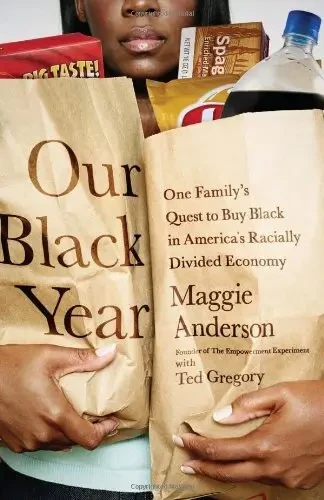
Her book, Our Black Year: One Family's Quest to Buy Black in America's Racially Divided Economy, drew praise from Publishers Weekly and Library Journal. Maggie brings that research and first-hand experience to universities, associations, nonprofits, and corporations, showing how spending and supplier decisions shape neighborhoods and opportunity. She also hosts The Maggie Anderson Show, featuring business leaders and changemakers from communities of color.
Audiences leave with a clear picture of how the racial wealth gap plays out in everyday spending, practical steps to widen supplier diversity, and a case for economic inclusion that benefits every community. She has been recognized by Harvard University, BET, and New York Life, and has appeared on CNN, PBS NewsHour, and in The New York Times.
Book Maggie for a research-backed, personal session on economic justice that moves audiences to act.
Topics, sessions and talks
Maggie Anderson tells the story of the year her family spent supporting only Black-owned businesses, an experiment that became her book Our Black Year and raised awareness of the economic challenges Black families face. Drawing on what that year revealed, she makes the case for self-help economics, conscious consumerism, and community support. Audiences come away seeing how everyday spending decisions can build economic independence and strengthen the communities they live and work in.
Despite significant spending power, Chicago's Black community has few Black-owned businesses to spend it with. Maggie Anderson examines why, and how corporations profit from Black consumers without reinvesting in them. As a leader in the conscious consumerism movement, she sets out the case for deliberately supporting minority-owned businesses. Audiences leave with a practical view of how their own purchasing choices can drive economic growth and equity in underserved communities and across society.
Maggie Anderson makes the case for urgently creating jobs in minority communities affected by economic downturns. She examines America's racially divided economy, the lack of supplier diversity, and the economic disenfranchisement that results. Alongside this, she explores what it means when ethnic groups support their own businesses, and why public perception of that differs from one group to another. Audiences leave better equipped to build community leadership and agency, and to drive positive change where they live and work.
Maggie Anderson started The Empowerment Experiment and it grew into a transnational movement for social change. Speaking to mothers, professionals, and homemakers alike, she encourages women to find a cause of their own and carry their impact beyond their immediate circles. Her own story is the proof that anyone can make a difference. Audiences leave with a clear sense of where their potential lies and how to turn it into change in their communities.
Maggie Anderson speaks openly about living with Stage 4 metastatic breast cancer while continuing her fight for economic justice. Drawing on her work as a JD/MBA, author, and activist, she shows how purposeful struggle and sacrifice build strength rather than drain it, and reframes community action and solidarity as a source of personal resilience, healing, and institutional change. Healthcare organizations, women's groups, and advocates see how fighting for a cause bigger than themselves can carry them through the hardest trials.
Maggie Anderson, JD, MBA, pairs academic rigor with a lived experiment that produced a Kellogg study on Black business and job creation. Organizations planning Black History Month, supplier diversity, or economic inclusion programs get evidence and a story audiences act on, as American Express and Rutgers Business School found.
Testimonials
Featured Projects

often considered together

Shola Mos-Shogbamimu
Diversity and Inclusion
Gender Equality
Social Justice

Wema Hoover
Diversity and Inclusion
Workplace Wellbeing
Emotional Intelligence
Daryl Davis
Diversity and Inclusion
Leadership Development
Transformational Leadership

frequently asked questions
Something we've not covered here?
Maggie Anderson pairs the story of her family's year buying only from Black-owned businesses with the research it produced, including the Kellogg study on job creation, and tailors each talk to the host organization, in person or virtually.
Maggie Anderson specializes in conscious consumerism and Black business ownership, the racially divided economy and supplier diversity, and self-help economics as a tool for community wealth-building. She is an economist, lecturer, and author of Our Black Year, and founded The Empowerment Experiment, whose results informed a Kellogg study finding nearly one million jobs could be created through greater support for Black-owned firms.
No. PepTalk adds no booking fee, so you pay the speaker's fee and nothing beyond it. The service, from shortlist through to contracts and event-day logistics, is included. For repeat or multi-event bookings, PepTalk can agree preferential rates with your procurement team.
Share your event date, audience, format, objectives and budget, and PepTalk sends a hand-picked shortlist within 24 hours. Each suggestion comes with a profile, a fee and a recommendation on the strongest fit. Once you choose, PepTalk handles contracts, travel and logistics through to event day.
The typical fee range is the speaker's standard in-person fee in their home market, shown in their local currency. It moves with format, location, date and session length: virtual sessions and shorter slots usually cost less, while international travel and peak dates cost more. Send your brief to PepTalk and the team will confirm the exact fee in your currency.
Not all of them, and it makes no difference to your booking. PepTalk's network of 15,000+ speakers covers talent the team works with directly alongside speakers represented by agents and agencies worldwide. PepTalk approaches the speaker, negotiates the fee and handles contracting either way.
Three to six months ahead is comfortable for most events, and 12 months is better for large conferences, peak-season dates or one specific in-demand speaker. Shorter timelines are workable, and PepTalk regularly fills last-minute and replacement bookings within days. Availability is the constraint, so get in touch as soon as you have a date.

