
Available to book
Whitney Simon
Diversity and Inclusion
Company Culture
Communication
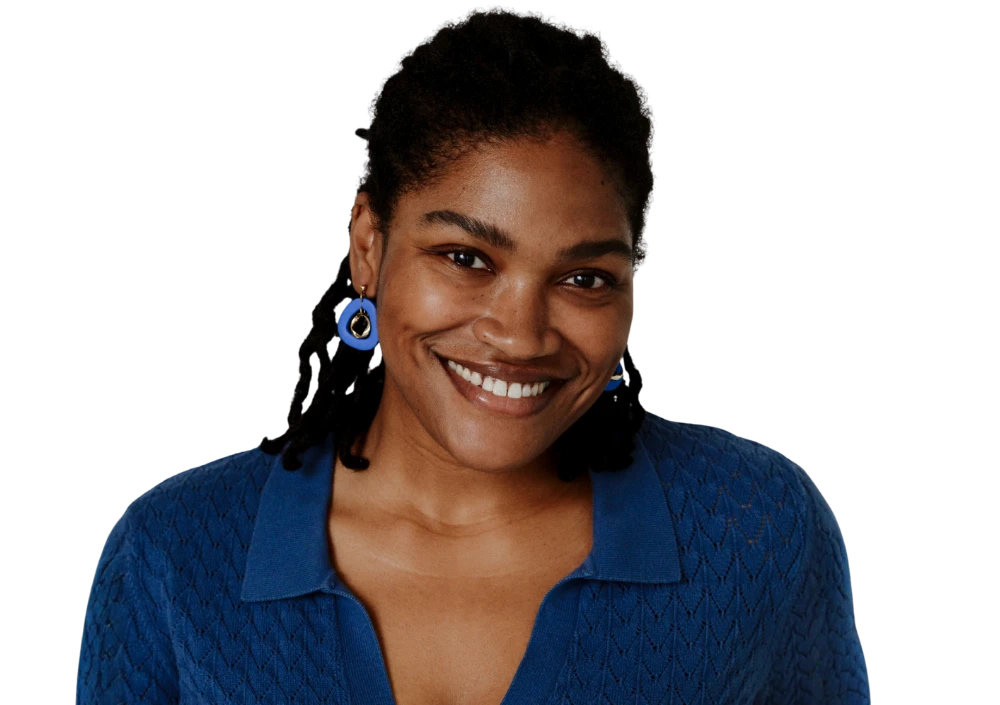
Whitney Simon helps organisations build workplace cultures where everyone belongs, specialising in culture and inclusion strategy and inclusive communications. A 2024 PRCA Industry Trailblazer and BME PR Pros Changemaker of the Year.
Inclusion
Mental Health Awareness
HR
Public Relations
Business Consulting
Founder
Event Hosts
Whitney Simon is a culture and inclusion strategist who helps organisations build workplaces where everyone belongs. She founded Anchor + Flow consultancy after a decade working across the US and UK in equity, inclusion, and strategic communications.
Prior to Anchor + Flow, Whitney founded and led the DEI Consulting Division at Missive, delivering programmes across four continents for startups, charities, and multinationals, including the Wellcome Trust. She sits on the PRCA Race and Ethnicity Equity Board, helping shape industry-wide standards for diversity and inclusion in the public relations and communications sector. Whitney is also on the steering committee of Project Nemo, working to embed disability inclusion within fintech and works as the Chair of the Founders Group for the UK Black Comms Network, an initiative aimed at increasing the seniority of Black PR, marketing, and communications professionals in the UK.
Whitney's experience spans both the strategic and the human sides of inclusion work, from advising leadership teams on cultural change to speaking, hosting, and interviewing on stages from the National Portrait Gallery to Mad//Fest London. Audiences leave with a clear understanding of how bias operates inside everyday systems, and a practical sense of what it takes to move from performative gestures to durable, structural change.
Named the 2024 PRCA Industry Trailblazer and BME PR Pros Changemaker of the Year, Whitney brings both credibility and warmth to make difficult conversations about equity and inclusion land. Book her to turn your organisation's commitment to inclusion into a strategy that actually works.
Topics, sessions and talks
Whitney Simon draws a hard line between nice cultures, which protect comfort, and kind cultures, which protect people. She unpacks how conflict avoidance masquerades as harmony, why the claim "we're such a nice team" so often conceals unaddressed harm, and what it actually takes to build a culture of courage. Drawing on her decade advising organisations on equity and inclusion, she gives audiences a clear-eyed framework for replacing performed harmony with honesty and accountability that genuinely holds.
Whitney Simon argues that burnout looks different when you are navigating institutions that were not built for you. She moves the wellbeing conversation beyond rest and boundaries to the systemic pressures that make people from marginalised groups unwell, and asks who is responsible for those conditions. Grounded in her work across equity and inclusion, she gives audiences a sharper, more intersectional lens on workplace wellbeing that names root causes rather than prescribing resilience to those least protected by the system.
Whitney Simon opens with a simple correction: AI did not invent bias, it inherited it. Drawing on real cases spanning hiring to recognition, she examines how inequity gets built into the tools organisations adopt at speed, often without anyone noticing until the damage is visible. She makes the case for putting an equity lens in the room from the start, not bolting one on afterwards, and leaves audiences with a starting point for interrogating the systems they rely on.
Whitney Simon argues that DEI has drifted into a numbers exercise, one more comfortable with a dashboard than a person's actual experience. She reclaims the human narrative at the heart of inclusion, making the case that lived experience and story shift people and cultures in ways a spreadsheet never will. Drawing on a decade spent inside organisations chasing metrics, she challenges audiences to rebalance measurement with meaning, and to treat storytelling as evidence rather than decoration.
Whitney Simon draws a clear distinction between awareness, which is easy, and change, which is hard. She interrogates whether International Women's Day posts and heritage month campaigns genuinely move the needle, or simply offer organisations a comfortable checkpoint to point to. Drawing on her board work with the PRCA and Project Nemo, she sets out what it actually takes to turn performative gestures into durable, structural progress, giving audiences a practical test for their own DEI calendar.
Testimonials

often considered together
Wema Hoover
Diversity and Inclusion
Workplace Wellbeing
Emotional Intelligence
Asif Sadiq
Diversity and Inclusion
Workplace Culture
Social Mobility

Collette Philip
Diversity and Inclusion
Entrepreneurship
Growth Mindset

frequently asked questions
Something we've not covered here?
Email whitney.simon@getapeptalk.com or call PepTalk on +44 20 3835 2929 (UK) or +1 737 888 5112 (US), and one of our speaker agents will contact you within hours to confirm Whitney's availability and fees. If you can, please include your budget upfront – it helps us fast-track your request. It’s also helpful to know the date, format (virtual or in-person), location, and a bit about your audience.
Whitney Simon structures her sessions around a central reframe — distinguishing, for instance, between "nice" and "kind" cultures, or repositioning AI bias as inherited rather than invented — before building outward to a framework grounded in her decade of equity and inclusion practice. Each talk moves from named root cause to practical starting point, giving audiences a diagnostic lens rather than a prescriptive checklist.
Whitney Simon speaks on the distinction between nice and inclusive cultures, intersectional approaches to workplace wellbeing, and equity in AI and algorithmic systems. She was named the 2024 PRCA Industry Trailblazer and BME PR Pros Changemaker of the Year, following a decade advising organisations across four continents on equity and inclusion, including the Wellcome Trust.
No. PepTalk adds no booking fee, so you pay the speaker's fee and nothing beyond it. The service, from shortlist through to contracts and event-day logistics, is included. For repeat or multi-event bookings, PepTalk can agree preferential rates with your procurement team.
Share your event date, audience, format, objectives and budget, and PepTalk sends a hand-picked shortlist within 24 hours. Each suggestion comes with a profile, a fee and a recommendation on the strongest fit. Once you choose, PepTalk handles contracts, travel and logistics through to event day.
The typical fee range is the speaker's standard in-person fee in their home market, shown in their local currency. It moves with format, location, date and session length: virtual sessions and shorter slots usually cost less, while international travel and peak dates cost more. Send your brief to PepTalk and the team will confirm the exact fee in your currency.
Not all of them, and it makes no difference to your booking. PepTalk's network of 15,000+ speakers covers talent the team works with directly alongside speakers represented by agents and agencies worldwide. PepTalk approaches the speaker, negotiates the fee and handles contracting either way.
Three to six months ahead is comfortable for most events, and 12 months is better for large conferences, peak-season dates or one specific in-demand speaker. Shorter timelines are workable, and PepTalk regularly fills last-minute and replacement bookings within days. Availability is the constraint, so get in touch as soon as you have a date.
Get the right person
Tell us what you’re working on and we’ll match you with the talent your audience won’t stop talking about.

